

CNC Laser Sheet Metal Cutting Solutions

Precise U.S. fabrication and faster schedules start with Fabritex.

We’re a second-generation, family-owned metal fabricator trusted since 1989. Our AISC-certified quality system supports structural, industrial, and custom work across the country, keeping cutting, inspection, forming, welding, and shipping close together.

Request a quote for a prototype, replacement part, repeat run, or structural fabrication project today.

Why We Use Fiber Laser Cutting for Structural Metal

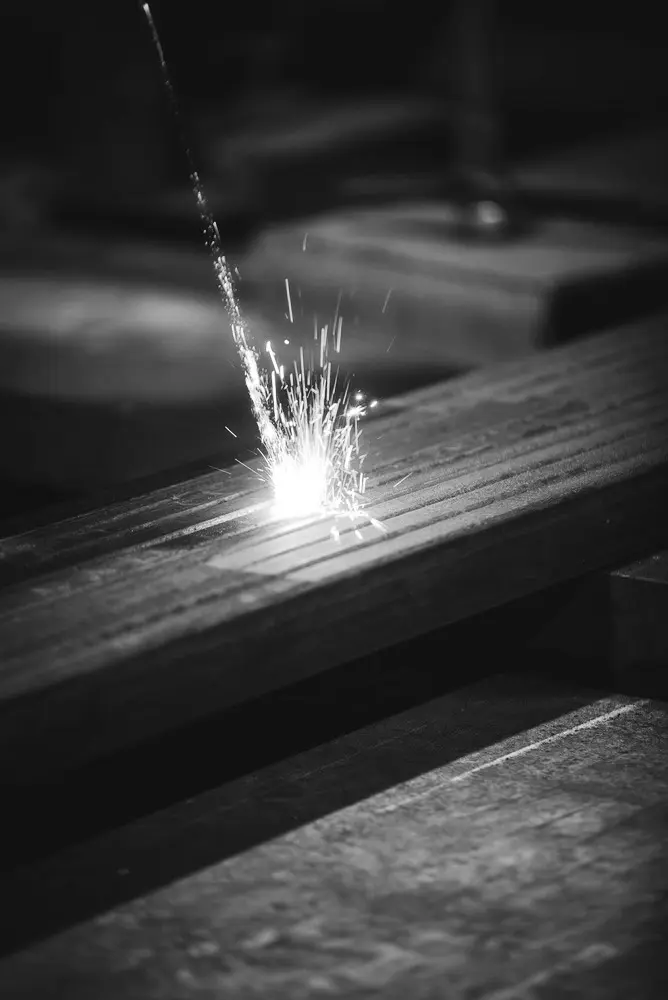
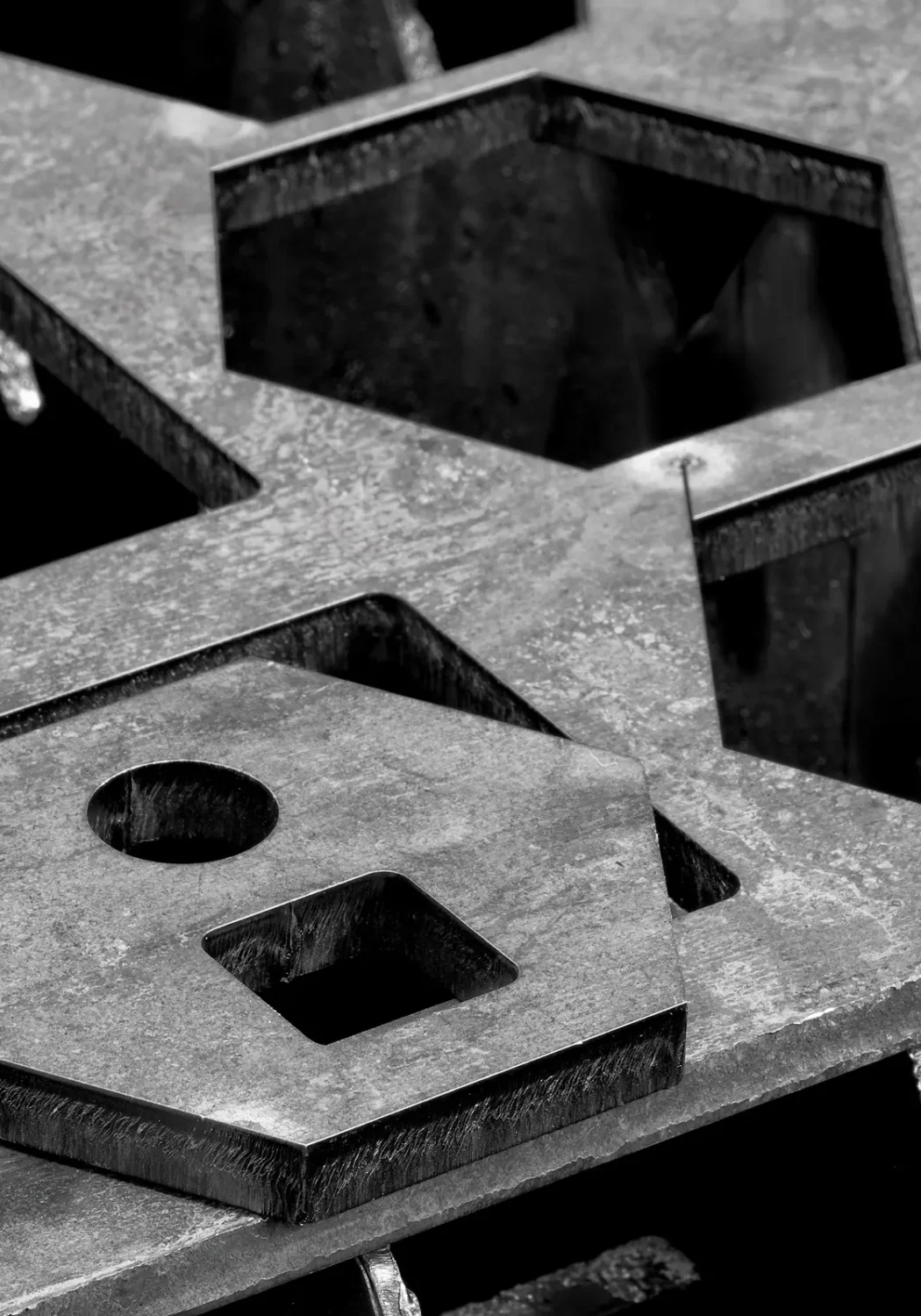
Fiber lasers follow computer-directed paths to cut sheet metal and plate from CAD files. This creates complex geometry without dedicated dies, producing accurate dimensions, clean edges, and limited heat distortion.

Fiber technology is well-suited for carbon steel, stainless steel, aluminum, copper, and brass. Its shorter wavelength works well on reflective metals, offering faster cutting on many thin-to-medium gauges with less optical maintenance than CO2 equipment.

Say goodbye to overseas sourcing delays. Our in-house production grants us direct control over programming, nesting, inspection, and sequencing. We also offer priority scheduling, shaped by material availability and shop capacity.

How CNC Fiber Laser Cutting Fits Your Workflow

Start with an RFQ and a DXF or DWG file for 2D profiles; STEP files add assembly context. Include details on the alloy, thickness, quantity, tolerance, finish, critical dimensions, and due date.

We confirm manufacturability, then we program the job. CNC nesting arranges parts in a way that improves material use while preserving grain direction. Common-line cutting or rotation can also reduce run time.

After cutting, we compare the parts to the approved drawing and inspection plan. Our checks cover dimensions, holes, edge condition, quantity, and material identity.

Material Selection and Cutting Capabilities

Carbon steel is suited for brackets, frames, carriers, and structural parts. Oxygen supports faster mild-steel cutting, but it also leaves oxide. Nitrogen provides an oxide-free edge before coating or welding.

Typically, stainless steel and aluminum are cut with nitrogen. Fiber sources over 500W can process suitable aluminum; 1kW guidance places stainless capacity around 0.090 inch. For comparison, CO2 systems can cut mild steel to 0.250 inch.

Copper and brass respond to the shorter wavelength of the fiber laser. Titanium needs careful gas control; share the exact grade and thickness for process review.

Reactive alloys require controlled atmospheres, as coated, layered, contaminated, or unknown metals can release hazardous fumes. Thick stock works better with plasma, waterjet, sawing, or machining.

Material Selection and Cutting Capabilities

Carbon steel is suited for brackets, frames, carriers, and structural parts. Oxygen supports faster mild-steel cutting, but it also leaves oxide. Nitrogen provides an oxide-free edge before coating or welding.

Typically, stainless steel and aluminum are cut with nitrogen. Fiber sources over 500W can process suitable aluminum; 1kW guidance places stainless capacity around 0.090 inch. For comparison, CO2 systems can cut mild steel to 0.250 inch.

Copper and brass respond to the shorter wavelength of the fiber laser. Titanium needs careful gas control; share the exact grade and thickness for process review.

Reactive alloys require controlled atmospheres, as coated, layered, contaminated, or unknown metals can release hazardous fumes. Thick stock works better with plasma, waterjet, sawing, or machining.

Cost-Effective Cutting and In-House Fabrication

The total costs reflect material, thickness, sheet yield, power, gas, programming, piercing, run time, quantity, tolerance, and inspection. Dense hole patterns add cycle time, but clean CAD data streamlines quoting.

With optimized nesting, you can minimize material waste. CNC laser cutting outruns traditional punching on many jobs since it does not need dedicated dies and moves directly from approved CAD geometry.

Our sheet metal fabrication services can pair cutting with CNC press brake forming, machining, bending, rolling, and AWS-certified MIG welding. Bundling this work cuts down on freight, setup, and vendor coordination.

Quality, Safety, and Maintenance Practices

Ahead of production, we review revisions, material, thickness, geometry, and critical dimensions. Inspection also includes first-piece checks, calibrated measurements, edge review, and quantity verification.

Enclosed work areas, interlocks, and fume extraction are all needed to keep hazards under control, as well as trained personnel. Procedures should cover sheet loading, sharp parts, assist gases, and machine alarms.

When it comes to care, prioritize the optics, nozzles, focus, alignment, filters, coolant, slats, and debris. Simple maintenance helps support stable edges and repeatability.

Applications Across Structural and Industrial Markets

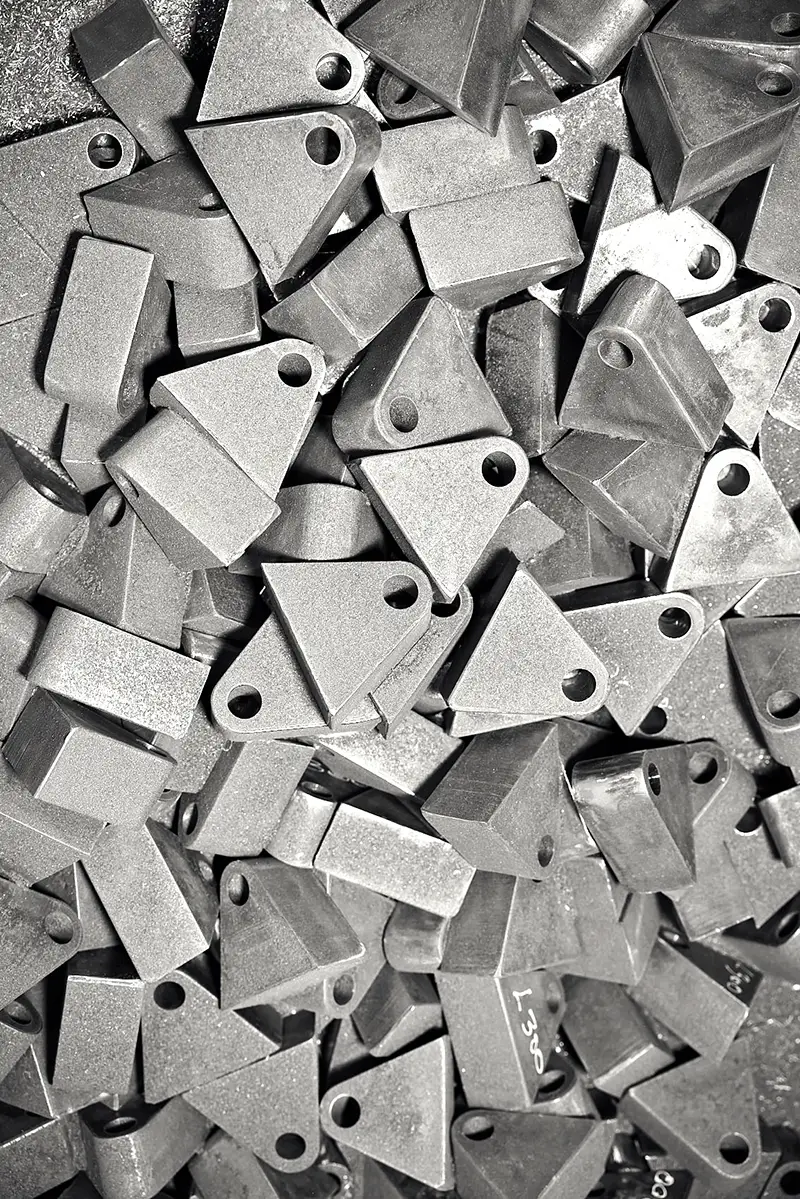
Laser-cut brackets, frames, panels, guards, carriers, handrails, and replacement parts serve structural work. Automotive and aerospace suppliers use the process to accurately repeat complex designs.

Fabritex can support agricultural storage, bridges, government work, and emergency relief structures. We also make parts for semi-permanent event structures, designed for precise fit and repeat assembly.

Our industrial work includes equipment components, replacement parts, and wire carriers. With Fabritex, customers can order cut parts, formed components, or welded assemblies from one U.S. fabrication team.

Pricing, Lead Times, and Requesting a Quote

Every single project receives a custom quote since material markets, geometry, quantity, and production requirements can range widely. We’re proud to provide competitive, individualized pricing.

Lead times come down to the material, workload, quantity, inspection, and follow-on work. We closely review due dates and rush options during the quoting process, then provide you with a job-specific production window.

Upload your drawings through our Request a Quote form, adding details on the grade, thickness, quantity, finish, tolerance, delivery location, and due date.

Bring us the drawing and deadline, and we’ll bring you decades of U.S. manufacturing experience, production planning, and in-house services to move the work forward.

Frequently Asked Questions About Laser Cutting

Can a CNC laser cut metal?

Yes, a CNC system directs a focused beam along programmed paths. It cuts detailed profiles, holes, slots, and complex shapes with clean edges and dimensional accuracy.

What metals cannot be laser cut?

Suitability depends on the machine, alloy, thickness, and coating. Unknown, contaminated, layered, or hazardous-coated metals can release unsafe fumes, while thick or reactive stock usually demands a different process.

How thick of steel can a 1000W laser cut?

A 1000W fiber laser can cut 0.250-inch mild or carbon steel under suitable conditions. Stainless capacity is near 0.090 inch. Fabritex can confirm limits during quoting.

Which file formats and assist gases are used?

DXF and DWG are for flat profiles; STEP adds 3D context. Oxygen is common for carbon steel, but nitrogen is used for oxide-free stainless steel, aluminum, brass, and copper edges.

Looking for a Rewarding Career in Metal Fabrication?

Apply today to become a part of our family!

Careers

Strong as Steel
Since 1989

Ready to get started?
Contact us today!

Get in Touch
Young man with arms crossed